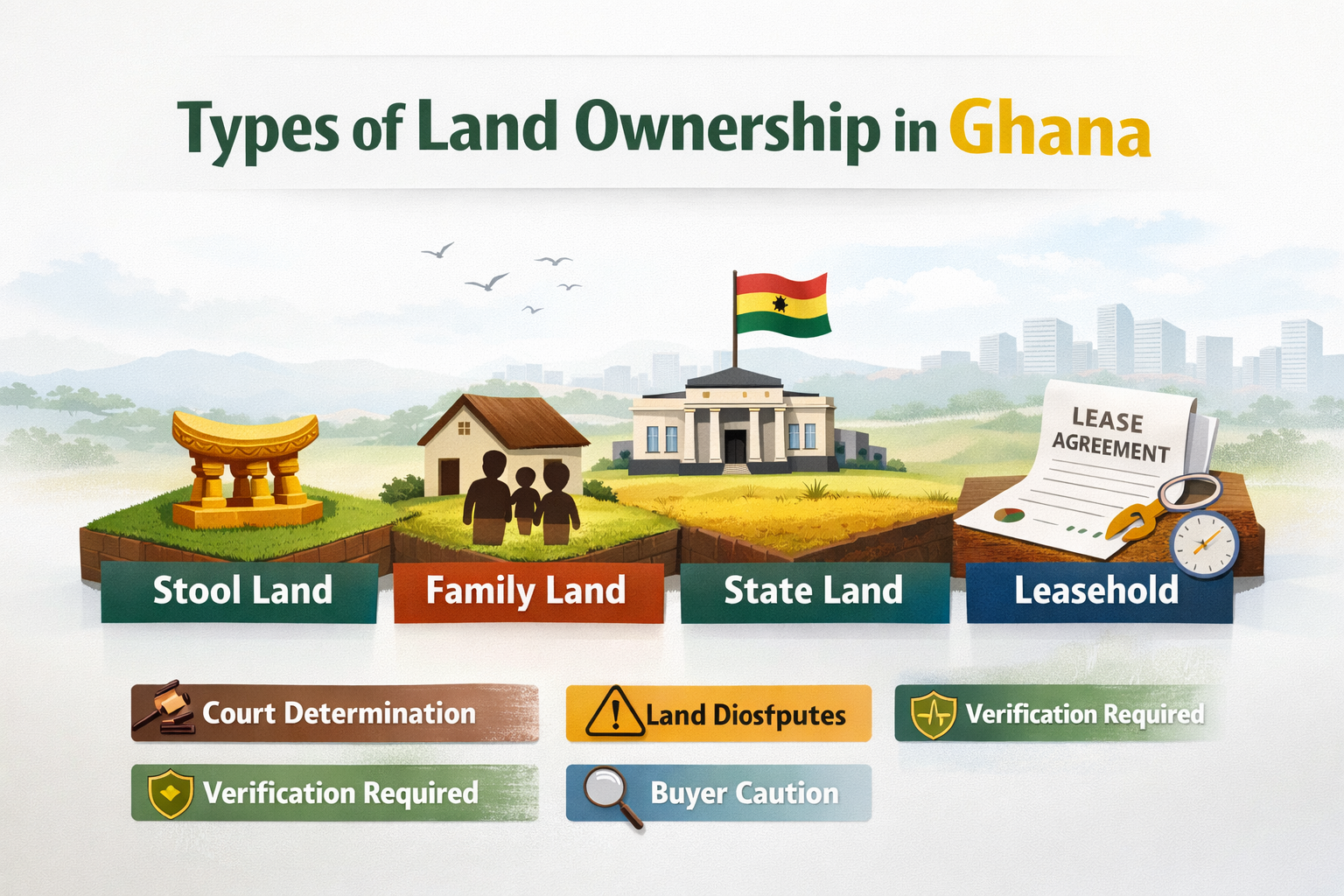
Understanding the Types of Land Ownership in Ghana
Land ownership in Ghana operates under a distinctive legal and customary system that differs from many other countries. Unlike nations where land is entirely state-owned, land in Ghana is primarily held by traditional authorities, families, clans, individuals, and organizations.
For property buyers — especially foreigners and first-time investors — understanding how land ownership works is essential to avoid disputes, fraud, and costly legal complications.
Who Owns Land in Ghana?
Before Ghana attained independence on 6th March 1957, various ethnic groups had already established ownership of land through settlement, inheritance, or conquest.
Today, land ownership in Ghana is legally recognized under several classifications:
- Clans and families
- Stool / customary ownership
- Individuals
- Public organizations
- Private organizations
Although these groups own land, the Government of Ghana retains the legal authority to compulsorily acquire land for national development projects.
What Is Allodial Land Ownership?
Allodial ownership represents the highest form of land ownership in Ghana. This category typically belongs to:
- Traditional stools
- Skins
- Families
- Clans
These entities hold ultimate title to the land, while other interests — such as leaseholds — may be granted to individuals or organizations.
Only the courts in Ghana have the authority to determine the rightful ownership of land.
Common Types of Land Interests in Ghana
1. Stool / Customary Land
These lands are controlled by traditional authorities on behalf of their communities.
- Most common type of land in Ghana
- Requires proper verification
- Documentation is critical
2. Family Land
Family lands are owned collectively and passed down through lineage.
- Multiple stakeholders involved
- Higher risk of disputes
- Requires thorough due diligence
3. State Land
State lands are acquired by the Government for public purposes.
- Often perceived as safer
- Still requires verification
- Proper registration is essential
4. Leasehold Interest
Most buyers acquire land through lease agreements rather than outright ownership.
- Standard practice in Ghana
- Fixed duration (typically 50–99 years)
- Renewable under conditions
Why Land Acquisition Can Be Risky
While Ghana’s land ownership system is legally structured, buyers may encounter challenges such as:
- Multiple ownership claims
- Historical disputes
- Fraudulent land sales
- Inadequate documentation
Even though illegal land guard activities are banned, land disputes remain a concern for uninformed buyers.
How to Safely Acquire Land in Ghana
Whether you are a Ghanaian buyer or a foreign investor, proper due diligence is absolutely necessary.
- Conduct an official land search
- Verify ownership documents
- Confirm litigation status
- Work with trusted real estate professionals
Buyers are strongly encouraged to verify land records through the Ghana Lands Commission:
This step significantly reduces the risk of acquiring disputed or encumbered land.
Why Expert Guidance Matters
Given the complexities of land ownership in Ghana, working with experienced professionals can protect buyers from costly mistakes.
Galeed Properties specializes in assisting clients with safe, verified, and genuine land acquisition across Ghana.
- Ownership verification
- Litigation checks
- Documentation support
- Secure transaction guidance